The Death of the Boiler Room: Why Deep-Work Sales Teams Outperform Noisy Offices
- Pipeline Operators

- Jan 27
- 13 min read
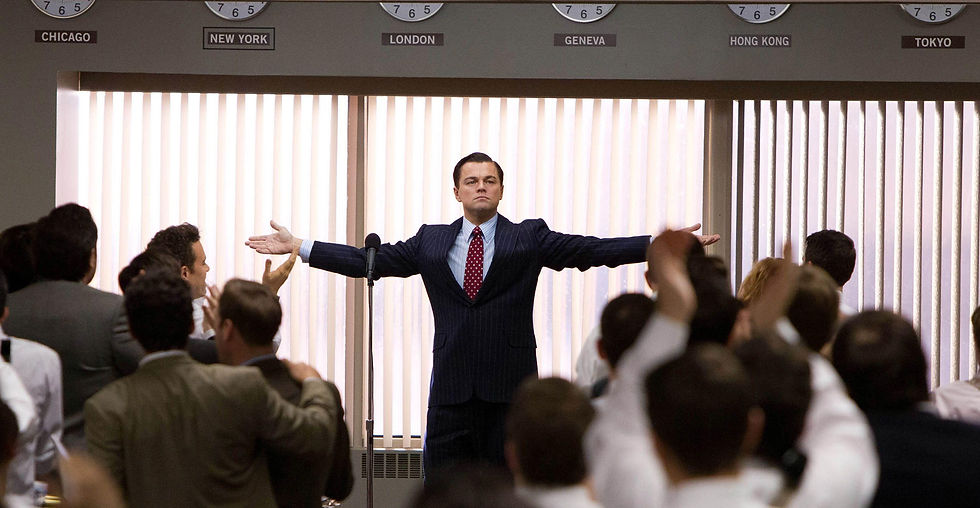
For years, the loud sales floor was treated like proof of performance.
Phones ringing. Managers pacing. Music playing. Reps shouting across the room. A gong on the wall. Someone high-fiving after a booked meeting. Someone else getting publicly pushed to make “just 20 more calls.”
It looked alive.
It looked like sales.
But modern B2B sales has moved past the theater.
The old boiler-room model was built for visible activity. The more noise in the room, the easier it was to believe something important was happening. But high-ticket sales today is not won by whoever creates the most chaos. It is won by the teams that protect attention, control the pipeline, understand the buyer, and execute cleanly across every step of the sales process.
The future of sales is not louder.
It is sharper.
And in many cases, the deep-work remote sales team has an operational advantage over the noisy office floor.
Not because remote work is automatically better. It is not. A remote team without structure can become just as messy as a bad office team.
But when remote sales is built correctly, with focus blocks, clean communication rules, strong CRM discipline, call standards, and proof of work, it creates something the traditional sales floor often destroys:
Signal.
The Sales Floor Was Built for a Different Buyer
The classic sales floor made sense in a different era.
The seller had more information than the buyer. The buyer had fewer options. The sales process was more linear. The goal was often simple: make the calls, push the pitch, overcome objections, and create enough urgency to force the next step.
That model rewarded aggression.
It rewarded volume.
It rewarded pressure.
But high-ticket B2B sales is different. The buyer is more informed. The buying process is more complex. The seller is not just competing against other vendors. They are competing against internal hesitation, budget pressure, operational risk, delayed decision-making, unclear priorities, and stakeholder disagreement.
That kind of sale does not need a hype man.
It needs an operator.
A modern seller has to research the account, understand the business, open the conversation calmly, ask better questions, listen closely, document the opportunity, follow up with precision, and move the deal forward without losing context.
That is not boiler-room work.
That is deep work.
The Myth of the “High-Energy” Sales Floor
There is a reason sales leaders still get attracted to the old sales floor.
It is easy to manage what you can see.
A manager walks into a room and hears activity. People are on phones. Dashboards are open. Reps are talking. The team looks busy. It creates the feeling of control.
But activity is not the same as revenue infrastructure.
A sales floor can be loud and still be sloppy. A rep can make 100 calls and still sound rushed, generic, unprepared, and forgettable. A team can look energetic and still have weak notes, poor follow-up, messy CRM data, shallow discovery, and no real pipeline truth.
The real question is not:
“Does the team look busy?”
The real question is:
“Is the pipeline being worked with enough discipline to create serious conversations?”
That is where the boiler-room model starts to fall apart.
Because the modern sales process is not just a volume game. It is a cognitive game. It requires judgment, attention, sequencing, timing, listening, personalization, documentation, and consistency.
The louder the environment becomes, the harder that work gets.
The Hidden Cost of Office Distractions
The biggest problem with the noisy office is not that people talk.
The problem is that interruption becomes normal.
A quick question. A side conversation. A manager stopping by. Someone yelling on a call nearby. A Slack notification. A meeting invite. A calendar change. A rep asking for help. A loud objection-handling moment two desks away.
Each interruption feels small.
Together, they create a focus tax.
Microsoft’s 2025 Work Trend Index found that employees using Microsoft 365 were interrupted, on average, every two minutes by a meeting, email, or notification. The same report found that 57% of meetings were ad hoc calls without a calendar invite, and 1 in 10 scheduled meetings were booked at the last minute. That is not a work rhythm. That is operational fragmentation.
For sales teams, this matters because selling is not only the live call.
The live call is just the visible part.
Underneath it, you have:
Sales task | What it requires |
Account research | Concentration, pattern recognition, business context |
List building | Clean judgment, data hygiene, attention to detail |
Cold email execution | Message discipline, personalization, segmentation |
Cold calling | Calm presence, fast thinking, strong opening |
Discovery | Active listening, patience, buyer understanding |
Follow-up | Timing, clarity, next-step control |
CRM updates | Accuracy, structure, pipeline truth |
Handoff | Context transfer, clean notes, deal continuity |
These are not tasks that improve with random interruption.
They improve with uninterrupted execution.
Context Switching Is Not a Minor Problem
A common mistake sales managers make is treating interruptions as harmless.
They assume a good rep should be able to “jump back in.”
But that is not how attention works.
Workplace interruption research has repeatedly shown that once attention is broken, people do not immediately return to the same level of focus.
UC Irvine researcher Gloria Mark and colleagues helped popularize this field of research by studying fragmented work and attention in real workplace settings.
A UC Berkeley summary of interruption research notes that workers averaged about 12 minutes and 40 seconds on a task before interruption, and roughly 25 minutes before returning to the same task. It also notes that after returning to a difficult task, it can take around 15 minutes to regain intense focus.
We should be careful with the popular “23 minutes to refocus” claim because it gets repeated online too casually. The useful point is not that every interruption costs exactly the same number of minutes.
The useful point is simpler:
Sales work loses quality when the rep is constantly forced to restart their brain.
That matters when a rep is researching a high-value account.
It matters when they are preparing for a discovery call.
It matters when they are writing a follow-up that has to sound specific instead of generic.
It matters when they are entering CRM notes that the closer, founder, or account manager will rely on later.
Context switching does not just steal time.
It weakens judgment.
And in high-ticket sales, weak judgment is expensive.
Open Offices Were Supposed to Create Collaboration
Open offices were sold as collaboration machines.
Remove the walls. Increase visibility. Let ideas move faster. Make communication easier.
That sounds good in theory.
But the research has not been kind to the fantasy.
A Harvard-linked study discussed in The New Yorker tracked employees at two Fortune 500 companies before and after moving to open offices. Face-to-face interaction dropped by roughly 70%, while electronic communication increased to compensate. In other words, removing walls did not automatically create better collaboration. It pushed people into digital refuge.
Acoustic research tells the same story from another angle. A 2023 study on auditory distraction in open-plan office environments found that irrelevant speech is consistently reported as one of the most distracting parts of open office soundscapes, and that multi-talker environments can degrade cognitive task performance. The researchers also found that subjective distraction increased as the number of talkers increased.
Another laboratory study on irrelevant speech in open-plan offices found that speech intelligibility had a significant effect on performance decrease, mental load, and discomfort during working-memory tasks.
That is the sales-floor problem in one sentence:
A room full of people talking is not automatically a room full of people performing.
For transactional sales, maybe the noise is manageable.
For complex sales, it becomes a drag.
Because the rep is not just dialing. They are thinking.
Remote Work Does Not Create Productivity. It Creates the Room for Productivity.
This is where the conversation needs discipline.
Remote work is not magic.
A remote rep can waste the day. A remote team can become invisible, reactive, and poorly managed. Remote sales without structure can turn into scattered effort with no accountability.
But that is not a remote-work problem.
That is an operating-system problem.
The real advantage of remote sales is not “working from home.”
The advantage is control over the environment.
Stanford economist Nicholas Bloom has written about a 2015 experiment at Ctrip, a Chinese travel company, where employees working from home saw a 13% productivity increase. He also notes that working from home is not ideal for everyone and argues for structured flexibility, with peaceful home days used for concentration work and office days used for collaboration.
A later randomized trial published in Nature studied 1,612 employees and found that hybrid work improved job satisfaction, reduced quit rates by one-third, and did not damage performance reviews or promotion outcomes over the following two years.
That is the balanced truth.
Remote and hybrid work can work extremely well when the tasks, people, systems, and expectations are aligned.
For sales, that means remote work should not be positioned as lifestyle comfort.
It should be positioned as operating discipline.
The point is not:
“Let reps sit on the couch.”
The point is:
“Give operators the environment required to produce clean revenue work.”
Why Quiet Wins the First Few Seconds of a Sales Call
The first few seconds of a sales call are fragile.
The buyer is busy. The rep is an interruption. The prospect is deciding, almost instantly, whether the person on the other end sounds relevant, credible, and worth a few more seconds.
This is where the noisy sales floor hurts.
A high-ticket prospect does not want to hear a zoo in the background.
They do not want to hear another rep pitching behind you.
They do not want your opening line fighting with office noise.
They do not want to feel like they are one of 200 people being blasted that day.
They want calm.
They want clarity.
They want a reason to keep listening.
Gong’s cold calling research puts it clearly: “You have 5 seconds to earn 5 minutes.” Their analysis also found that opening with “Did I catch you at a bad time?” made reps 40% less likely to book a meeting, while stating the reason for the call was associated with a 2.1x higher success rate.
That does not mean every team should blindly copy every line from Gong data. Sales context matters. Industry matters. Offer matters. Buyer type matters.
But the principle is useful:
The opening moment has to be controlled.
The seller needs to sound human, calm, prepared, and specific.
And background chaos works against that.
USC research on audio quality found that poor sound quality can reduce trust in both the information being shared and the person sharing it. The researchers summarized the core psychology simply: when information is harder to process, it becomes less credible.
In sales, that matters.
If a prospect has to work harder to hear you, trust you, or understand you, they have an easier reason to end the conversation.
Silence is not empty.
Silence is part of the premium sales environment.
The Best Sellers Are Not Just Talkers. They Are Structured Listeners.
The old sales floor often celebrates the loudest rep.
Modern sales rewards the clearest thinker.
There is a difference.
A loud rep can dominate a call and still learn nothing. A polished rep can deliver a beautiful pitch and still miss the buyer’s real concern. A confident rep can sound impressive and still fail to move the opportunity forward.
High-ticket sales requires active listening, not passive silence.
Gong’s 2025 analysis of 326,000 sales calls found that the average talk-to-listen ratio across calls was 60% talking and 40% listening. Closed-won deals had slightly lower rep talk time, 57%, compared with 62% in lost deals. Gong’s older research also pointed to the often-cited 43% talking and 57% listening benchmark for strong sales conversations.
The exact ratio is less important than the behavior underneath it.
Good sellers do not just talk less.
They listen better.
They ask better questions. They pause. They paraphrase. They confirm. They let the buyer explain the business problem in their own words. They avoid turning discovery into an interrogation. They guide the conversation without steamrolling it.
That is hard to do when the rep is physically and mentally overstimulated.
A noisy environment pushes sellers toward performance mode.
A deep-work environment supports diagnostic mode.
And diagnostic selling is what complex buyers actually need.
The Deep-Work Sales Operating System
Remote sales only works when it has a system.
Without a system, it becomes chaos with better furniture.
The best remote sales teams are not loose. They are structured. They do not replace office noise with Slack noise. They do not replace the sales floor with endless Zoom calls. They do not confuse flexibility with lack of standards.
They build an operating rhythm.
Here is what that looks like.
1. Protected Outbound Blocks
Outbound work should not be squeezed between meetings.
It needs protected time.
A serious sales operation should have dedicated blocks for:
Prospect research
List building
Cold email execution
Cold calling
Follow-up
CRM cleanup
Proposal or quote review
Pipeline updates
These blocks should be treated like client meetings.
No casual internal pings.
No random meetings.
No “quick second?” interruptions.
No manager check-ins unless there is a real emergency.
The point is simple:
If sales activity is the engine, focus blocks are the protected factory floor.
You do not run a production line while people keep walking through the machinery.
2. Meeting Filters
Not every internal conversation deserves a meeting.
Before a sales meeting is booked, the team should ask:
Question | Why it matters |
What decision are we making? | Prevents status meetings with no outcome |
Who needs to be there? | Reduces unnecessary attendance |
Can this be solved with a CRM note? | Protects selling time |
Can this be solved with a Loom or written update? | Reduces calendar load |
What is the owner and next step? | Prevents circular discussion |
This is where many sales teams lose the plot.
They add meetings to improve control, but too many meetings reduce the time available to do the work being discussed.
A pipeline meeting should improve pipeline movement.
If it does not, it is just administrative noise.
3. Batch Communication
The modern remote sales team has to avoid the digital version of the open office.
Slack, email, WhatsApp, Teams, and CRM notifications can become a constant interruption machine.
Microsoft’s Work Trend data shows the problem clearly: the average worker receives 117 emails daily and 153 Teams messages per weekday, with work fragmented by meetings, messages, and notifications throughout the day.
A sales team cannot afford to let communication tools run the day.
The better system is batching.
For example:
Time | Communication rule |
Morning | Review priorities, urgent client notes, active opportunities |
Midday | Check internal messages, answer questions, clear blockers |
Afternoon | Review follow-ups, handoffs, CRM updates |
End of day | Final pipeline update and next-day priorities |
This does not mean ignoring the team.
It means preventing the team from interrupting itself into mediocrity.
4. Call Environment Standards
A remote sales team should have stricter call standards than an office team.
Every rep should have:
A quiet call environment
Clean audio
Stable internet
CRM open before the call
Notes template ready
Call objective defined
Prospect context reviewed
Next step documented immediately after
This matters especially for high-ticket service businesses.
When a prospect is discussing a serious operational problem, a premium service, or a complex buying decision, the call environment becomes part of the brand experience.
A calm rep signals control.
Clean audio signals professionalism.
Prepared questions signal respect.
Good notes signal operational maturity.
The buyer may not consciously say, “This company has good sales infrastructure.”
But they feel the difference.
5. Proof of Work Without Sales Floor Theater
One reason some companies resist remote sales is fear.
They worry reps will disappear.
They worry nobody is really working.
They worry that without a manager watching the room, sales activity will drop.
That fear is understandable.
But the solution is not a noisy office.
The solution is proof of work.
A strong remote sales team should be measured by real operating indicators:
Category | What to track |
Activity | Calls, emails, follow-ups, touches completed |
Quality | Reply quality, call notes, personalization, list accuracy |
Conversion | Conversations, meetings booked, show rate, qualified opportunities |
Pipeline | Stage movement, next steps, stalled deals, revived leads |
Discipline | CRM hygiene, same-day updates, handoff completeness |
Buyer experience | Call quality, relevance, follow-up clarity |
This is the difference between management by visibility and management by truth.
A manager watching a room sees motion.
A manager watching the right system sees performance.
6. One Main Project Per Deep-Work Block
Sales teams often lose time because reps bounce between too many tasks.
A little prospecting.
A little CRM cleanup.
A few calls.
A few Slack replies.
A half-written follow-up.
A meeting.
Back to the follow-up.
Then another call.
The day feels full, but nothing gets fully processed.
A better rule:
One main project per deep-work block.
Examples:
Block | Main project |
9:00 to 10:30 | Build and clean 50 target accounts |
10:45 to 12:15 | Call yesterday’s warm responses |
1:00 to 2:30 | Write and send follow-ups for active opportunities |
3:00 to 4:00 | CRM cleanup and pipeline update |
This is not complicated.
That is why it works.
Sales operations improve when fewer things are done at the same time, and more important things are completed properly.
The Boiler Room Made Sales Visible. Deep-Work Sales Makes Revenue Predictable.
The old sales floor gave leadership something comforting.
Visible effort.
You could walk in and hear calls happening. You could see reps at desks. You could feel the energy.
But visible effort is not the same as controlled revenue.
Predictable growth comes from cleaner inputs:
Better targeting
Better research
Better call environments
Better listening
Better follow-up
Better CRM notes
Better handoffs
Better pipeline visibility
Better management rhythm
That is not glamorous.
It does not always come with a gong.
But it compounds.
A noisy sales floor can create exciting days.
A deep-work sales system creates repeatable output.
And for high-ticket service businesses, repeatability matters more than hype.
Because one good day of energy does not build a pipeline.
A system does.
The New Sales Assembly Line
The best sales teams now operate less like boiler rooms and more like precision assembly lines.
Not in the sense that people become robots.
The opposite.
The system handles the structure so the human can do better human work.
A strong sales assembly line has clear stages:
Stage | Output |
Data architecture | Clean market, account, and contact lists |
Outreach execution | Calls, emails, LinkedIn touches, follow-ups |
Qualification | Clear fit, urgency, authority, problem, next step |
Appointment setting | Booked calls with context and expectations |
Discovery | Buyer pain, decision process, blockers, opportunity shape |
Closing support | Proposal, objection handling, decision navigation |
Pipeline control | CRM truth, follow-up discipline, stage movement |
Revive motion | Old leads reactivated and worked systematically |
The sales team is not just “making calls.”
It is moving accounts through a controlled operating system.
This is where remote sales can become powerful.
When the office bottleneck is removed, the team can protect quiet execution, hire across geographies, extend coverage, create cleaner handoffs, and build a pipeline machine that does not depend on physical proximity.
But again, this only works when the team has standards.
Remote work without standards is scattered.
Remote work with standards is leverage.
What High-Ticket Service Businesses Should Take From This
If you run a high-ticket service business, the question is not simply:
“Should my sales team be remote or in-office?”
That is too shallow.
The better question is:
“What environment produces the highest-quality sales work?”
For some teams, that may include office days.
For others, it may be fully remote.
For many, it may be a hybrid rhythm.
But the principle stays the same:
Your sales environment should protect the work that creates revenue.
That means fewer interruptions during outbound.
Cleaner call environments.
Better follow-up discipline.
Less meeting clutter.
More accurate CRM data.
More time spent on serious conversations.
Less energy wasted on sales floor performance.
A loud room can make a team look productive.
A disciplined system makes the pipeline healthier.
That is the shift.
Final Thought: The Death of the Boiler Room Is Not the Death of Sales Energy
This is not an argument against energy.
Great sales teams need energy.
They need urgency. They need confidence. They need momentum. They need strong personalities. They need people who can handle rejection and keep moving.
But energy has to be aimed.
Uncontrolled energy becomes noise.
Controlled energy becomes execution.
The boiler room was built for a time when sales leaders needed to see activity to believe it was happening. Modern B2B sales requires something more mature: quieter systems, sharper operators, better data, cleaner conversations, and a pipeline that tells the truth.
The future of high-ticket sales is not a louder room.
It is a better operating environment.
At Pipeline Operators, that is the standard we believe in: sales support built around structured outreach, calm execution, disciplined follow-up, and pipeline control.
Because serious prospects are not won by noise.
They are won by operators who know how to turn attention into revenue.



Comments